
YoYa Time: Build, Share & Play
YoYa WorldSimulation
3.81.31K Reviews
- Version
- 2.34
- Installs
- 10.00M
- Age Rating
- Everyone
Screenshots


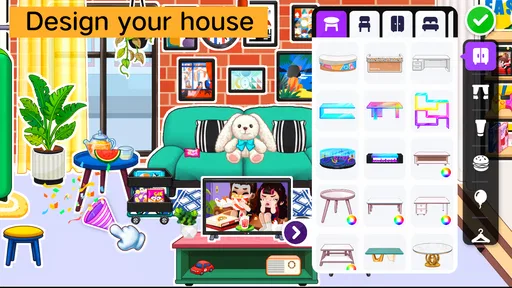
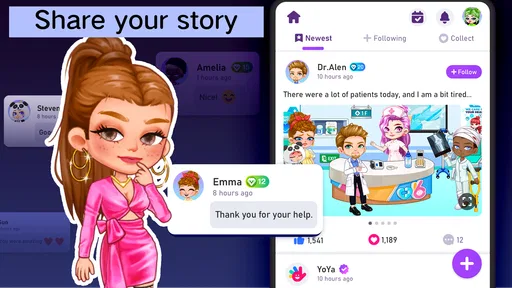
Our Review of YoYa Time: Build, Share & Play
 Analysis by Appyee
I spent time with YoYa Time: Build, Share & Play as a relaxed mobile simulation game, and my first impression was that it is less about winning than about making a small world feel like your own. The appeal comes from creating characters, arranging places, and turning ordinary city-life ideas into little stories. It is the kind of game I can imagine opening for a few minutes while waiting for an appointment, then returning to later when I have a better idea for a scene.
That freedom also explains why the game will not suit everyone. If you want clear objectives, strategic battles, measurable progress, or a campaign with a strong ending, this is not built around those expectations. If you enjoy dressing characters, setting up rooms, inventing relationships, and sharing imaginative situations, it has a much more natural appeal. I found it best understood as a creative play space with simulation elements rather than a conventional life-management game.
How the creative city-life format works in practice
YoYa World is the developer behind the game, and the central idea is straightforward: you shape characters and environments, then use them to act out stories. The store summary describes it as a character creator and world builder focused on city life, but that short explanation does not quite capture the hands-on rhythm. The interesting part is the transition from arranging a scene to imagining what happens inside it.
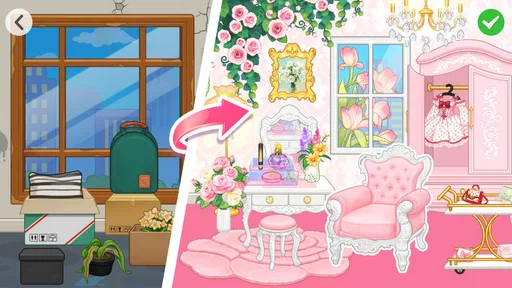
I approached it by treating each location as a tiny stage. Instead of trying to build everything at once, I started with one character, one setting, and a simple reason for being there. That made the experience feel less cluttered and helped me notice which details mattered to the story. A café visit, a trip through a neighborhood, or an afternoon at home can become more engaging when I give each character a role rather than simply moving objects around.
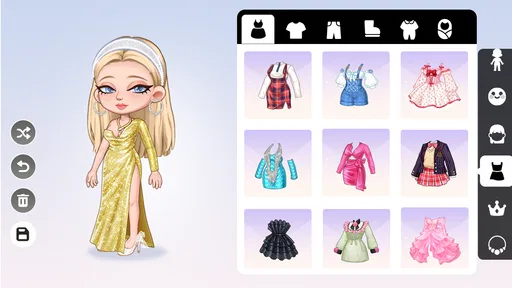
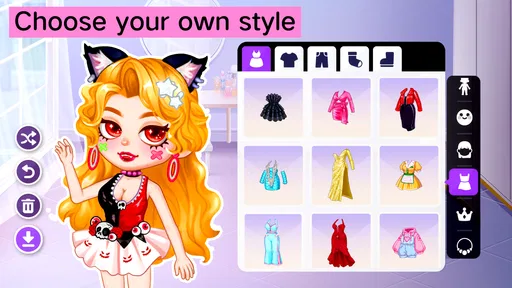
The character-creation side is especially useful for players who want stories that reflect their own ideas. You can think about personality through appearance, clothing, and the way a character fits into a chosen scene. I would not call this a deep role-playing system, because the enjoyment comes from the player supplying the motives and dialogue. The game provides the setting for imagination; it does not write the complete story for you.
That distinction is important for parents deciding whether younger players will enjoy it. The game carries an Everyone content rating, which makes it approachable as a family-friendly creative title. Still, a child who expects constant rewards or obvious instructions may need a little guidance at first. Showing them how to begin with one small scene is more helpful than simply handing over the device and expecting the world-building idea to explain itself.
On Android, the listed minimum operating-system requirement is version 7.0, so the compatibility threshold is relatively accessible for older supported devices. The current version is 2.34. I would still judge the experience on the actual phone or tablet available, because creative games become frustrating when the screen feels cramped or moving between items feels awkward. A larger display is more comfortable for arranging scenes and checking details.
Why the open-ended design can be surprisingly useful
The strongest use case is not simply “play when bored.” I found the game more rewarding when I used it as a visual planning tool for a story. Before starting, I decided who the characters were, what they wanted, and what small problem might change the scene. That three-step preparation gave the session direction without turning it into homework.
It can also work as a gentle shared activity. One person can choose the location, another can decide what the characters are doing, and a third can add a complication. Because the game is based on arranging and imagining rather than fast reactions, it is easier to discuss choices while playing. That makes it a better fit for relaxed co-creation than for people looking for a competitive multiplayer challenge.
My most useful tip is to build scenes in layers. I first place the main characters, then the essential objects, and only afterward add decorative details. Starting with decoration can make the screen look busy before the story has a purpose. Layering also makes it easier to reuse a location for a different scenario instead of rebuilding everything whenever the mood changes.
Another practical approach is to keep a small set of recurring characters. Giving them different roles in different scenes creates continuity and makes the city feel more personal. One character might be a student in one story and a neighbor helping someone in another. The game becomes more interesting when I treat its tools as a way to explore relationships, not merely as a catalog of visual choices.
Where the free-to-play model affects the decision
The game is free to download, but it includes in-app purchases priced from $0.99 to $79.99 per item. That range matters more here than it would in a purely linear game, because creative players may want additional ways to personalize characters or settings as they spend more time building scenes. I would not assume that every useful option is locked behind payment, and I would not assume the opposite either. The sensible approach is to start without spending and decide whether the available creative space already satisfies you.
For a child’s device, I would handle purchases before handing over the game. The safest routine is to keep buying under adult control and make the spending rule clear in advance. A free entry point can feel harmless, but the presence of individual purchases means the game should be treated like other free-to-play entertainment rather than like a completely cost-free toy.
I also think the purchase range changes who should skip it. If you dislike games that invite optional spending, a paid creative title with one upfront cost may feel more comfortable. On the other hand, if you only want to experiment casually, downloading this one without paying gives you a low-risk way to see whether the style matches your taste. I would not spend simply because a new item looks attractive; I would wait until I know it supports a type of scene I repeatedly enjoy making.
There is a useful fairness distinction here. This is not presented as a competitive game where paying would obviously give someone an advantage over another player. The core appeal is personal creation, so the main concern is value and pressure rather than leaderboard balance. That does not remove the need for spending discipline, but it does mean the purchase question is mostly about how much creative variety you want, not about keeping up with opponents.
Progress feels personal rather than competitive
Traditional simulation games often give me a chain of objectives: earn resources, unlock areas, improve a home, or complete tasks. YoYa Time feels different because progress is largely measured by the scenes I can imagine and finish. That can be liberating, but it can also feel vague. There is no obvious reason to continue unless I enjoy the act of creating.
I found it helpful to define a small goal before each session. I might decide to create a family visit, design a new room around one character, or tell a short story with a beginning and an ending. This turns an open sandbox into a manageable creative exercise. Without a goal, I sometimes moved between possibilities without committing to any of them, which is the main form of friction I noticed.
Players who need frequent rewards may therefore find the pace underwhelming. The game does not appeal in the same way as a management simulator that constantly acknowledges efficiency or improvement. Its reward is the finished scene and the feeling that the setting expresses an idea. That is satisfying for imaginative players, but it is a quieter kind of progress.
This also affects replay value. A conventional game can bring me back with new challenges, while this one depends more on whether I still have stories to explore. The best replay loop is self-directed: change the relationships, move the same characters into a different situation, or rebuild a familiar place with a new purpose. If I only want new objectives supplied by the game, the open format may run out of momentum sooner.
Fairness compared with other simulation choices
Compared with a goal-driven life simulator, this game gives me more room to stage scenes without worrying about optimizing a schedule or managing a complicated economy. That makes it easier to play casually and easier for younger users to understand. The trade-off is that it offers less structure for someone who enjoys planning around systems, resources, and long-term progression.
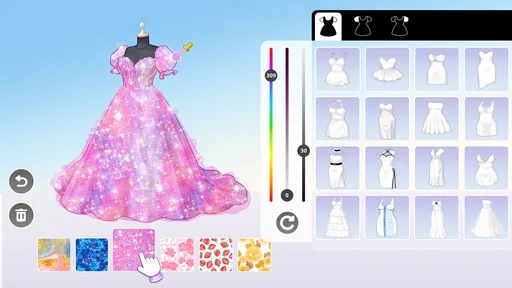
Compared with a dress-up app, it goes beyond choosing an outfit by placing characters inside a broader setting. The environment gives the choices context, which is why I found the world-building angle more engaging than a simple sequence of costume changes. However, players who mainly want fashion variety may prefer a more specialized app that focuses almost entirely on appearance.
Compared with a story game that supplies dialogue and plot, this one leaves much more responsibility with the player. That is its creative strength and its biggest barrier. I can make a story that feels personal, but I must provide the imagination, the pacing, and often the emotional meaning. Someone looking for a ready-made narrative should choose a title that tells the story for them.
The competitive-fairness question is relatively simple: I would not choose this game for competition at all. Its value is private or social creativity. There is no reason to compare my city with another player’s city as though one were objectively better. A carefully made, tiny scene can be more enjoyable than a large one if it gives me a clearer idea to play with.
Questions I would consider before installing
Is it suitable for a short daily session? Yes, provided you set your own target. A quick scene can be enough, especially when you already know which character or location you want to use. It is less suitable if you expect a complete mission or a strong reward cycle every time you open it.
Will it work for a child who has never played a world-building game? It can, particularly if an adult demonstrates one simple scene first. The open-ended design may be inviting, but it can also be confusing when there are many possible directions. A small prompt such as “make a character visit a friend” gives a beginner something concrete to do.
Should I spend money immediately? I would not. Since the game is free and purchases range from $0.99 to $79.99 per item, I would first test how much enjoyment comes from the starting creative options. Only consider a purchase after identifying a repeated limitation that genuinely affects the stories you want to make.
Is it the right choice for someone who wants competitive fairness? No, not in the usual sense. It is better for self-expression than for contests, rankings, or skill comparisons. If your main motivation is proving that you are better than other players, a competitive game with clearly defined rules will be more satisfying.
What should I do if I lose interest quickly? Try changing the way you play before judging the whole concept. Use a recurring cast, create a short three-part story, or rebuild one location for a completely different event. If those approaches still feel like work, the lack of structured progression is probably a fundamental mismatch rather than a temporary problem.
What remains uncertain and why that matters
I prefer not to treat a store rating as a substitute for personal fit. The game has an average rating of 3.8 from around 61 thousand ratings, with roughly 1.3 thousand written reviews, and it has passed 10 million installs. Those figures show that it has reached a substantial audience, but they do not tell me whether a particular player enjoys open-ended creation, tolerates optional purchases, or prefers a more guided experience.
The same caution applies to the free label. Free access is useful for trying the concept, but it does not automatically mean the complete creative experience will satisfy every player without spending. Because individual purchases cover a wide range, I would make the decision based on actual use rather than on the download price alone. The best test is whether I can make several scenes I genuinely want to revisit before considering anything extra.
I also would not confuse the Everyone age rating with a guarantee that every family will use the game in exactly the same way. Younger players may still need help understanding creative boundaries and spending rules. The rating describes the content level, while an adult’s guidance determines whether the surrounding play habits are comfortable for that household.
For me, the most important unknown is not technical or numerical; it is whether the player enjoys supplying the missing structure. The game gives me a setting for city-life stories, but I have to decide what matters in those stories. That is a strength when I want control and a weakness when I want the game to keep surprising me with clear events.
My trust verdict
I trust YoYa Time as a straightforward creative simulation for people who want to invent scenes rather than chase victories. Its free entry point, Everyone rating, and accessible Android requirement make it easy to try, while the character and world-building focus gives it a distinct place between dress-up play and more structured life simulators.
My recommendation comes with a clear condition: treat it as a creative toolkit, not as a conventional progression game. Start with one character and one small story, build scenes in layers, and decide on a spending boundary before optional purchases become part of the routine. Those habits make the experience calmer and help reveal whether the game’s open format is genuinely right for you.
I would recommend it to imaginative players, families looking for a relaxed shared activity, and anyone who likes turning ordinary city-life situations into personal stories. I would skip it if I wanted demanding strategy, constant objectives, a finished narrative, or a competitive test of skill. For the right player, the strongest value is the freedom to make a world that feels personally meaningful; for everyone else, that same freedom may feel like a lack of direction.
Verdict
Strengths of YoYa Time: Build, Share & Play
- Creative building tools encourage open-ended imagination.
- Avatar customization offers plenty of ways to create a personal style.
- Interactive locations provide varied activities beyond simple decorating.
- Sharing creations can inspire ideas from other players.
- Colorful visuals are appealing to younger audiences.
Limitations of YoYa Time: Build, Share & Play
- Some items and customization options may require in-app purchases.
- The large number of choices can feel overwhelming for new players.
- Online sharing features may require parental supervision.
- Gameplay can become repetitive after exploring the main locations.
- Performance may vary on older or less powerful devices.
Other Releases by YoYa World
View All
YoYa Sparkle: Style Pop
Casual4.7
Similar Picks in This Category
View All
Truckers of Europe 3
Wanda Software4.3

Town Building Life Simulator
XGame Global4.2

Fidget Toys Trading・Pop It 3D
Freeplay Inc4.7

Sculpt People
CrazyLabs LTD4.4

Scary Teacher 3D
Z & K Games4.2

Hair Tattoo: Barber Shop Game
CASUAL AZUR GAMES4.3
Frequently Asked Questions
What is YoYa Time: Build, Share & Play?
YoYa Time: Build, Share & Play is a creative social game where players can explore colorful locations, customize characters, decorate spaces, and create their own stories. Instead of following a strict campaign, you are encouraged to experiment with outfits, objects, pets, and environments. It is designed mainly for casual, imaginative play and appeals to users who enjoy virtual worlds, role-playing, and creating shareable scenes.
Is YoYa Time: Build, Share & Play free to download?
The game can generally be downloaded and played without an upfront purchase, but some content may be offered through optional in-app purchases. These purchases can include special items, character accessories, locations, or other customization options. The free version still provides activities to explore, although the complete experience may require patience or additional spending. Parents should review purchase settings before allowing children to play.
Is YoYa Time: Build, Share & Play suitable for children?
YoYa Time: Build, Share & Play uses bright visuals, simple interactions, and gentle role-playing features, making it suitable for many younger players. However, the appropriate age can depend on the child’s reading ability, spending awareness, and access to sharing or social features. Adults should check the current store rating, privacy options, advertisements, and in-app purchase controls before installation.
Does the game require an internet connection?
Some parts of YoYa Time: Build, Share & Play may work offline after the game and its required resources have been installed, particularly basic customization and world-building activities. However, an internet connection may be needed for updates, downloading new content, advertisements, account-related functions, or sharing creations. Availability can vary by device and version, so offline players should test the features they need before traveling.
Can players customize characters and create their own stories?
Customization and storytelling are central to YoYa Time: Build, Share & Play. Players can usually change character appearances, clothing, accessories, and surroundings, then arrange objects and characters to act out personal scenarios. The game provides creative tools rather than a single correct objective, so the experience is especially enjoyable for users who like making scenes, experimenting with styles, and revisiting their own virtual creations.
Play our best games!


